
How Food-Contact Plastics Are Regulated for Safety
People Deserve Confidence in the Food-Contact Items They Use Every Day
American consumers can feel confident that the packaging and products that contact our food and beverages are highly regulated and rigorously tested for safety, including our pets’ food.
Plastics – and the additives in plastics – that contact food and beverages are subject to multiple layers of oversight and regulation in the United States. These materials must meet strict federal safety requirements before they can be used, sold or marketed.
Use of Food-Contact Plastics Is Highly Regulated
Current regulations, primarily administered by the U.S. Food and Drug Administration (FDA), are rigorous, science-based and designed to help protect public health. They also play an important role in maintaining public trust in the packaging that stores, transports and protects food.
The FDA regulates food-contact plastics/additives as “food-contact substances” (FCSs).
According to FDA, FCSs include packaging materials and items that may reasonably be expected to come into contact with food during manufacturing, transport, storage or use. For example, FCSs include plastics/additives used in food processing equipment, food preparation surfaces, cutting boards, cookware, bottles and packaging (including pet food packaging).
Before an FCS can be marketed in the U.S., FDA requires scientific data demonstrating their safety for intended use. That review process can include evaluating:
- The type of food (9 different categories, including beverages) the packaging will contact
- How long the food and packaging interact
- Whether or not the packaging will be refilled
- Whether the packaging will be exposed to heat, cold or sunlight
- Whether the substance migrate from packaging into food
- Estimated dietary exposure, if any, as a result of migration
- Toxicology and safety data
For example, FDA evaluates data from testing under real-world conditions that take into account the type of food being packaged (beverages, wet or dry foods, acidic or fatty foods) and the intended use of the packaging (refilled, frozen, boiled, microwaved).
- A frozen microwavable meal is both frozen and microwaved to make sure the FCS do not migrate from the packaging at levels deemed unsafe.
- Packaging intended to be microwaved is heated above boiling to 266 degrees F for 15 minutes to test for potential migration of the FCS.
- A plastic bag to roast a turkey is tested at the maximum intended cooking temperature for the longest intended cooking time before being approved for use.

If FDA identifies a significant safety concern, the agency can deny a proposed use.
FDA also monitors emerging science and reviews its decisions as new scientific information becomes available. FDA has the authority to revoke an authorization if “the agency is no longer able to conclude that there is a reasonable certainty of no harm from the authorized use.”
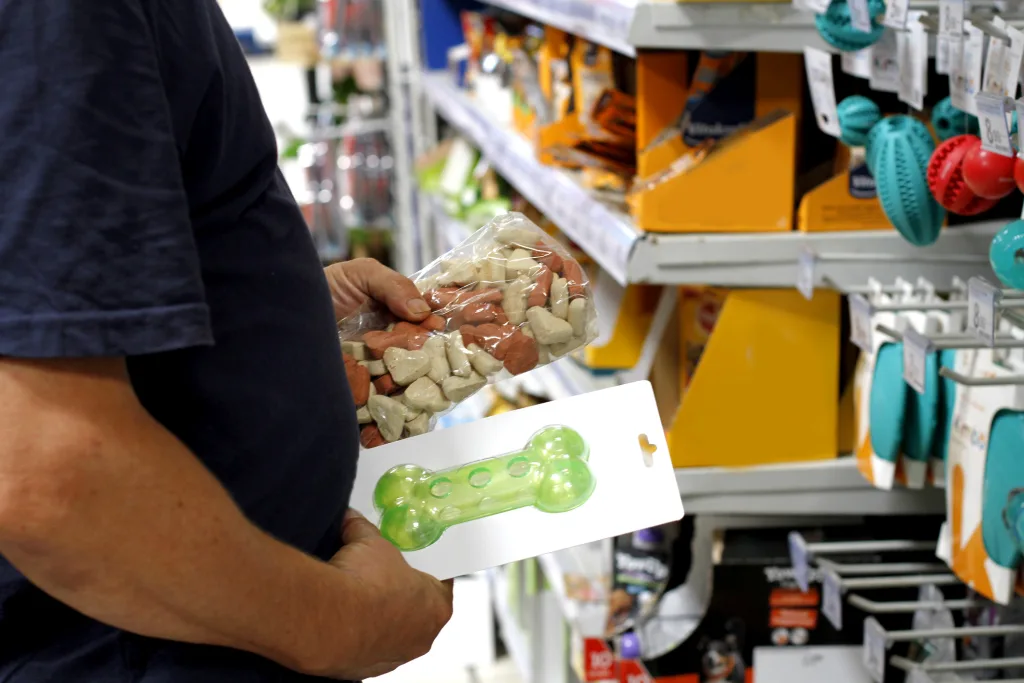
Pet Food
Because pet food is food, pet food packaging is generally evaluated through the same food-contact safety framework used for many human food applications.
USDA Inspections
Additionally, the U.S. Department of Agriculture’s Food Safety and Inspection Service (FSIS) inspects packaging materials for meat and poultry products.
Packaging materials entering a meat or poultry plant must be accompanied or covered by a guaranty or statement of assurance from the packaging supplier. The guaranty must state that the material complies with the Federal Food, Drug and Cosmetic Act (FFDCA). It must also state the brand name, supplier, and conditions for use, including temperature and other limits.
USDA’s Food Safety and Inspection Service (FSIS) monitors the use of packaging material in all meat and poultry plants. The plants must maintain a file containing guaranties for all packing materials in the plant. This file must be open to FSIS officials at all times.
To verify guaranties, FSIS randomly selects packaging materials for review. If the Agency determines a packaging material does not comply with Federal food laws and regulations, the material is disapproved and its use in federally-inspected meat and poultry plants may be denied.
American consumers can feel confident that food-contact plastics and additives are highly regulated and rigorously tested for safety.
Packaging Protects Our Food Supply
Plastic packaging is designed to be highly effective at protecting food and products from damage, contamination and spoilage.
Various types of packaging serve different purposes:
- Tamper-resistant seals can indicate whether a product has been opened or compromised
- Protective barriers help shield food from oxygen, moisture, pathogens and contaminants
- Flexible films and wraps help preserve freshness
- Liners in cans and cups help prevent leaks and unwanted interactions between food and packaging materials
- Transparent packaging can allow consumers to inspect products while helping protect them from contamination
These packaging technologies help food remain safe and usable throughout transportation, storage and everyday use.
Packaging Reduces Food Waste and its Environmental Footprint
Packaging is also an important tool for reducing food waste. By helping food stay fresh and protected during transport, packaging can reduce spoilage and food loss across the supply chain and in our homes. By lengthening the freshness and shelf life of food, packaging makes food more accessible and affordable.
Food packaging also plays an essential role in fighting global hunger by helping reduce spoilage and preserving the nutritional value of food through transport to food-insecure populations.
Additionally, there are several environmental benefits to reducing food waste, including conserving water, energy, agricultural resources and transportation resources. Reducing food waste also cuts the significant methane emissions from food sent to landfills.
In many applications, a small amount of plastic packaging can help prevent significant environmental impacts associated with wasted food.
Regulations Matter… and So Does Scientific Accuracy
America has one of the most comprehensive regulatory systems for food and product safety in the world.
America’s plastic makers are subject to federal, state and local requirements designed to help protect people and the environment. That includes regulations governing manufacturing, emissions, product safety, food-contact materials and labeling claims.
Smart, science-based regulations are essential for both public safety and public confidence. And consumers should have access to accurate, evidence-based information so they can make informed decisions for themselves and their families.
As conversations about packaging continue evolving, it’s important that public discussions reflect the full body of scientific evidence, the role packaging plays in protecting food/products and the rigorous regulatory systems in place today.
How Food-Contact Plastics Are Regulated for Safety
Which plastics are safe for food contact?
There are innumerable types of plastic, but only plastics that have been evaluated and authorized by the U.S. Food and Drug Administration (FDA) for food-contact uses can be used to package, store, transport, and protect food and beverages. FDA requirements vary based on the specific plastic, its intended use, and how it may come into contact with food.
What does “food-grade” or “food-contact” plastic actually mean?
“Food-grade” or “food-contact” typically refers to substances that are regulated by the FDA as “food-contact substances” (FCSs). According to FDA, FCSs include packaging materials and items that may reasonably be expected to come into contact with food during manufacturing, transport, storage or use.
For example, FCSs include plastics and additives used in food processing equipment, food preparation surfaces, cutting boards, cookware, bottles and packaging (including pet food packaging).
How does the FDA decide a food-contact plastic is safe before it can be sold?
Before a food-contact plastic can be used, sold or marketed in the U.S., the FDA generally requires scientific data demonstrating its safety for its intended use. That review process can include evaluating:
- The type of food (9 different categories, including beverages) the packaging will contact
- How long the food and packaging interact
- Whether the packaging will be exposed to heat, cold or sunlight
- Whether small amounts of the substance could migrate from packaging into food
- Estimated dietary exposure, if any, as a result of migration
- Whether or not the packaging will be refilled
- Toxicology and safety data
Is plastic food packaging tested under real conditions?
Food-contact plastics are evaluated for their intended use. For example, FDA evaluates data from testing under real-world conditions that take into account the type of food being packaged (beverages, wet or dry foods, acidic or fatty foods) and the intended use of the packaging (refilled, frozen, boiled, microwaved). In addition, testing often exaggerates real-world conditions, which can add an extra safety buffer.
Can chemicals migrate (or “leach”) from plastic into food?
Substances used to make food packaging of any type (plastic, metals, paper, etc.) have the potential to migrate into food. To confirm that levels likely to migrate are below safety thresholds set by the FDA, food-contact substances undergo significant testing under real-world conditions for the intended use. If FDA identifies a significant safety concern, the agency can object to the proposed use of that packaging material and prevent its entry into the market.
How can I tell if a container is “food-grade”?
Substances (including materials) used to package food in the U.S. must undergo FDA review. So, if the container or package contains food when purchased, it is food-grade.
However, there is no labeling requirement for food-grade plastics in the United States. Some containers carry a goblet and fork symbol or labeling that identifies the container as food-grade or food-safe, and some may indicate they are not food-safe. However, lack of labeling does not indicate a lack of safety.
Consumers can also contact the container and/or food manufacturer directly for confirmation.
Is it safe to microwave food in plastic containers?
Food-contact plastics are evaluated for their intended use, such as microwaving. During testing:
- A frozen microwavable meal is both frozen and microwaved to make sure that substances do not migrate from the packaging at levels deemed unsafe.
- Packaging intended for microwaving is heated above boiling to 266 degrees F for 15 minutes to measure potential substance migration.
Additionally, the manufacturer must indicate any use limitations on the packaging. Always be sure to follow the manufacturer’s instructions.
Avoid microwaving in a plastic container unless the package specifically indicates you can. Unless the container or package was designed to withstand microwave conditions, it could lose its integrity during heating and cause hot spills or burns
Does plastic food packaging release microplastics into food?
While the release of microparticles from multiple packaging materials is likely inevitable during food manufacture, distribution and use, the FDA has found that:
“Current scientific evidence does not demonstrate that levels of microplastics detected in foods pose a risk to human health.”
Current evidence suggests food packaging releases far fewer microplastics than many publications have reported, according to the European Food Safety Authority (EFSA). The governmental health authority reached that conclusion after identifying more than 1,700 microplastics studies from 2015 to 2025, noting microplastic release is due to mechanical stress, such as abrasion or friction. Learn more.
Does food packaging actually reduce enough waste to justify the plastic?
Plastic packaging has been proven highly effective at protecting food and extending its shelf life. When food spoils, it costs people money and negatively impacts the environment.
Additionally, multiple studies have found that plastic packaging typically has lower lifecycle greenhouse gas emissions and creates less waste compared to alternatives such as metal, glass and paper. This is largely because plastics require far less material to package food than alternatives.
In many applications, a small amount of plastic packaging can help prevent significant environmental impacts from heavier packaging and/or food waste.