I’m born and raised in Michigan, but I spend a lot of time in our nation’s Capital.
On August 22 and 23, when fans watch the Freedom 250 Grand Prix in Washington, D.C., they’ll see some of the world’s most advanced race cars speeding around the track. What many won’t realize is that today’s IndyCars showcase not just cutting-edge racing technology but also the future of automotive safety—and an opportunity for U.S. manufacturing and recycling policy.
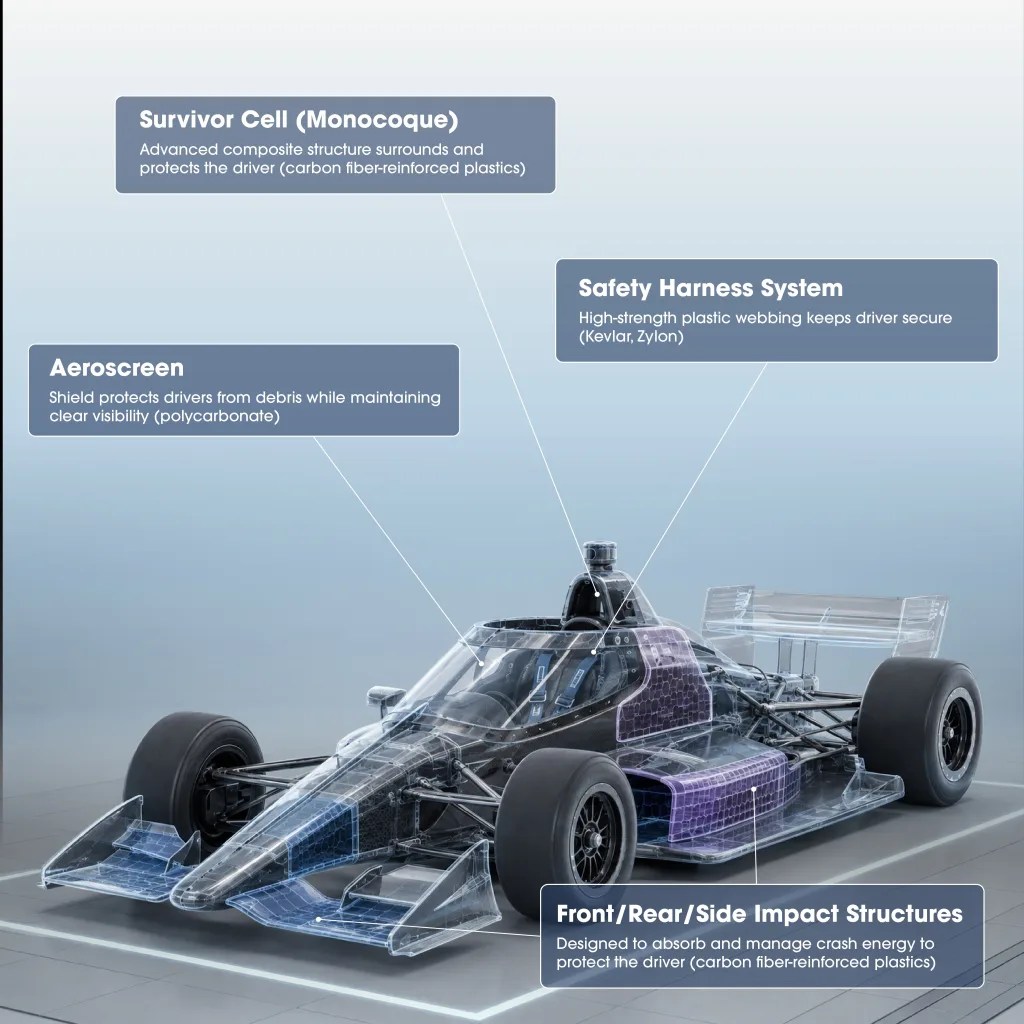
The survivor cell, or monocoque, of an IndyCar is built primarily from advanced plastic materials, including carbon-fiber reinforced plastics, Kevlar, Zylon and polycarbonate. These materials help create the reinforced cockpit, energy-absorbing crash structures and the polycarbonate aeroscreen that protect drivers from debris while maintaining visibility.
The same innovation cycle that has long connected motorsports and consumer vehicles is happening again. Technologies developed for racing routinely find their way into the cars and trucks Americans drive every day. Increasingly, that includes advanced plastics that improve crash protection and vehicle performance.
This trend is accelerating.
Modern vehicles already rely on plastics for hundreds of components, and the amount of plastic used in automobiles is expected to continue growing as advanced driver assistance systems and autonomous vehicle technologies require more sensors, electronics and lightweight materials. These materials help improve safety, performance and fuel efficiency.

But this innovation raises an important public policy question: What happens to all of those plastics when a vehicle reaches the end of its life?
Today, much of the plastic from end-of-life shredded vehicles is not recycled into new products. Instead, a significant portion is landfilled, representing both a lost economic opportunity and a missed chance to strengthen America’s domestic manufacturing supply chain.
Even the racing industry recognizes the benefits of automotive plastics recycling. For the 2025 season, INDYCAR introduced a carbon-fiber and magnesium recycling program to recover damaged race vehicle components and repurpose materials that otherwise would have gone to landfill. If recycling makes sense for some of the most technologically advanced vehicles in the world, it should also be a priority for the millions of passenger cars and trucks retired each year in the United States.
The economic opportunity is substantial. When a vehicle is mechanically shredded at the end of its useful life, it creates a fluff mixture called automotive shredder residue, or ASR. Our research estimates that separating and recycling the plastics from ASR, which is currently sent to landfills, could support approximately 12,600 American jobs, generate more than $1.1 billion in annual payroll and create roughly $4.4 billion in economic output.
There is also an increasingly urgent global competitiveness challenge.
Automakers operating in the United States compete in a global marketplace. New recycled-content and circular economy requirements are emerging in major markets, including the European Union, Japan and Mexico. Manufacturers that cannot access reliable supplies of recycled automotive plastics may face higher costs and greater foreign competitive pressure.
Without a robust domestic recycling system, U.S. manufacturers could become increasingly dependent on imported recycled materials to satisfy global requirements. That would represent a missed opportunity to build American manufacturing capacity, create jobs and strengthen domestic supply chains.
Smart federal policy can help change that.
Congress has an opportunity to encourage investment in the collection, sorting and recycling infrastructure needed to recover automotive plastics at scale. Policies that improve material recovery, encourage innovation and support domestic recycling capacity can help ensure American automakers have access to reliable, high-quality recycled materials produced here at home.
Legislation such as the bipartisan Recycled Materials Attribution Act represents one promising step toward modernizing recycling policy and helping increase recycled materials while supporting investment in U.S. recycling infrastructure.
The automotive and plastics industries are already working together to develop technologies and systems that can recover and recycle more plastics from end-of-life vehicles. With supportive federal policies, the United States can accelerate that progress, strengthen domestic manufacturing and position itself as a global leader in recycled automotive plastics.
The next breakthrough in automotive innovation isn’t just about designing safer vehicles. It’s also about ensuring the valuable materials that make those vehicles possible remain part of America’s manufacturing economy long after the checkered flag falls.