POLICY POSITION
Driving Automotive Circularity and Recycling
America’s Plastic Makers® support policies and investments that accelerate a more circular automotive supply chain, keeping valuable plastics and polymer composites in use and out of landfills.
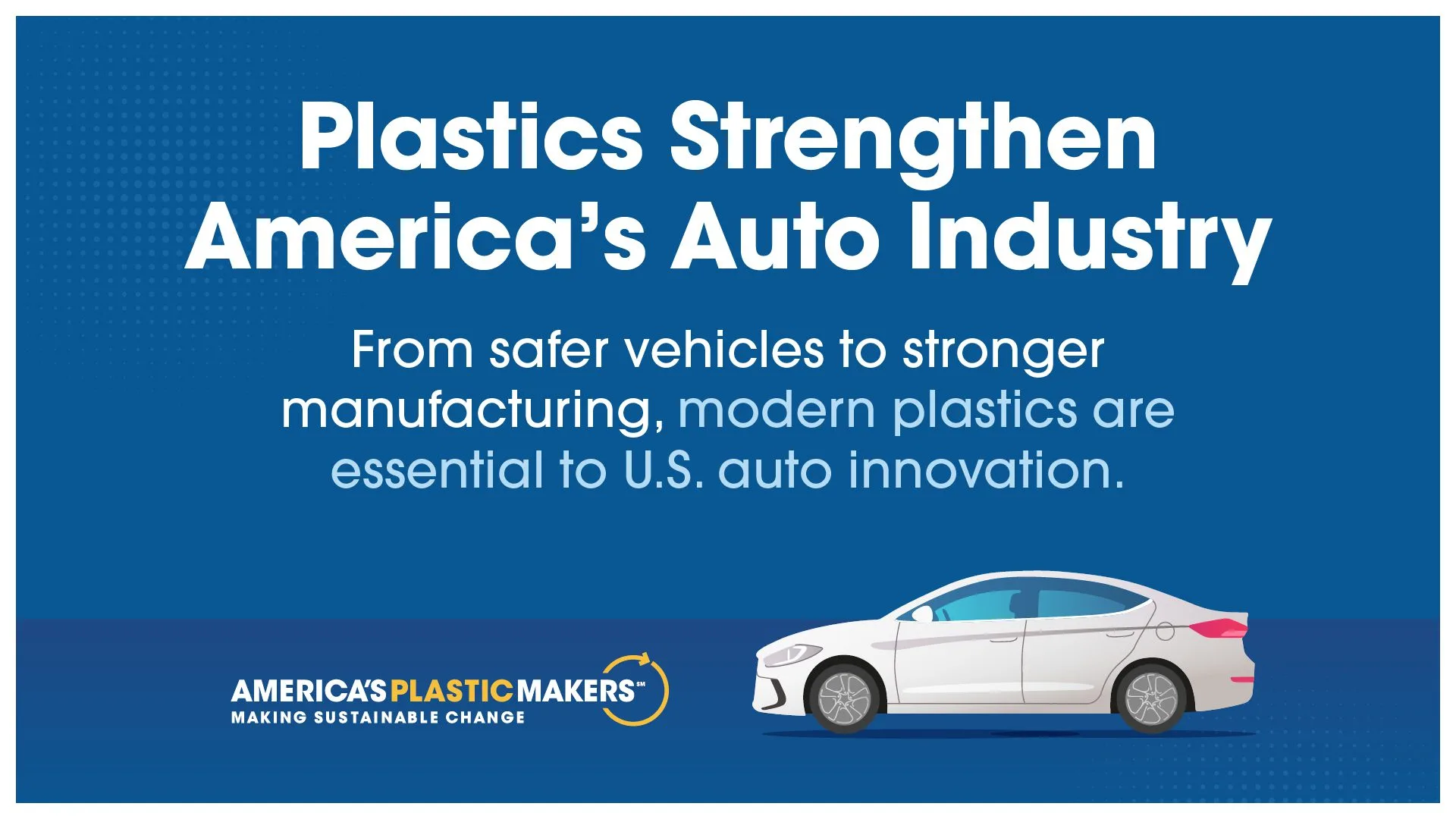
Plastics are essential to lighter, safer, and more fuel-efficient vehicles. As vehicles reach end-of-life, these materials should be recovered and used as recycled feedstocks in new automotive and industrial manufacturing.
Building a stronger circular economy for automotive plastics will help strengthen U.S. manufacturing, improve supply chain resilience, support automaker sustainability goals, and position the United States to compete in an increasingly circular global marketplace.
Global Momentum Is Reshaping Automotive Supply Chains
Automotive circularity is increasingly becoming a global manufacturing and trade priority.
In Europe, policymakers are advancing more aggressive end-of-life vehicle (ELV) requirements, recycled content requirements, and vehicle design standards intended to increase material recovery and reduce waste across the automotive value chain. The European Union’s ELV framework already requires high levels of vehicle reuse, recycling, and recovery, and proposed updates would expand circularity requirements for vehicle design and material use.
Similar efforts are also advancing across Asia-Pacific markets and Mexico. For example, Japan’s End-of-Life Vehicle Recycling Law established one of the world’s most mature automotive recycling systems, helping drive vehicle recovery rates above 95% while requiring automakers to support recycling of materials such as automobile shredder residue, airbags, and refrigerants. China and South Korea are also expanding broader circular economy and recycling policies tied to automotive manufacturing and materials recovery, reinforcing growing global demand for recycled and recoverable automotive materials.
These policies are influencing global automotive supply chains and increasing demand for recycled and circular materials across the industry.
For U.S. automakers and suppliers, this creates both a challenge and an opportunity: building domestic infrastructure and policy certainty that can support growing demand for recycled automotive materials while strengthening American manufacturing competitiveness. Without stronger domestic recycling and recovery systems, U.S. manufacturers may become increasingly dependent on imported recycled feedstocks and foreign supply chains to meet evolving global market expectations.

Growing Momentum Toward More Circular Vehicles
Automakers and suppliers across the global automotive industry are increasingly incorporating recycled materials, circular design principles, and recyclability goals into vehicle manufacturing strategies.
A few examples:
- BMW Group’s focus on circular vehicle design and increased use of secondary materials
- Mercedes-Benz’s “Ambition 2039” circularity initiatives
- Stellantis’ Circular Economy Business Unit under its “Dare Forward 2030” strategy
- Ford, GM, Toyota, and Volkswagen sustainability commitments related to recycled materials and vehicle recyclability
As these commitments evolve, the need for scalable domestic recycling infrastructure and advanced material recovery systems will continue to grow.
Why Accelerating Automotive Circularity Matters
Millions of vehicles reach end-of-life in the United States each year, creating a significant opportunity to recover valuable materials and strengthen domestic manufacturing supply chains.
Accelerating automotive plastics recovery can:
- Reduce landfill disposal and retain valuable materials in productive use
- Support automaker recycled content and circularity goals
- Strengthen U.S. manufacturing competitiveness and feedstock security
- Help create a more resilient and efficient domestic materials economy
Advanced Recycling Expands Automotive Recycling Opportunities
Mechanical recycling remains an important pathway for many automotive plastics and components. However, some complex, mixed, or difficult-to-recycle materials require additional recovery solutions.
Advanced recycling technologies complement mechanical recycling by converting post-use plastics into raw materials and feedstocks that can be used to manufacture new products, including materials suitable for demanding automotive applications. Recovered automotive plastics can also help supply recycled feedstocks for a range of manufacturing applications, beyond automotive, including industrial, consumer, and packaging uses.
These technologies can help recover materials that might otherwise be landfilled while supporting broader circularity goals across the automotive supply chain.
To help scale investment and innovation, advanced recycling technologies should be regulated as manufacturing processes. Regulatory certainty will help expand infrastructure, support domestic recycling capacity, and accelerate circular feedstock development.
Our Policy Principles
- Recognize Advanced Recycling as Manufacturing Provide clear federal and state regulatory frameworks that treat advanced recycling technologies as manufacturing processes.
- Scale Automotive Plastics Recovery Infrastructure Support regional recovery, sorting, recycling, and compounding systems that strengthen end-of-life vehicle plastics recovery.
- Encourage Design for Recyclability Promote vehicle and component design approaches that improve disassembly, material identification, and recovery outcomes.
- Support Verified Recycled Content Systems Recognize auditable chain-of-custody systems, including mass balance approaches supported by recognized certification programs.
- Promote Regulatory Harmonization Encourage consistent policies and standards that support investment, innovation, and circular supply chain development across jurisdictions.
Building a Circular Automotive Industry
America’s Plastic Makers® support solutions that strengthen automotive recycling systems, expand material recovery, and help build a more circular domestic manufacturing economy.
We encourage automakers, suppliers, recyclers, dismantlers, policymakers, and technology providers to work together to scale infrastructure, advance innovation, and accelerate automotive circularity in the United States.
Contact us to learn about automotive recycling research projects and workshops.