Plastics enable autonomous vehicles by making their complex electronic ‘brains’ work reliably and safely. Autonomous vehicles rely on an array of embedded sensors, including cameras, radars and satellite receptors, all of which are made with plastics. For example, light detection and ranging (LIDAR), along with video detection and ranging (VIDAR) are critical as they help the vehicle navigate and avoid collisions.
Plastics also encapsulate and insulate these technologies from radio interference, humidity, dust and temperature changes to keep them operating safely, which helps keep occupants safe.
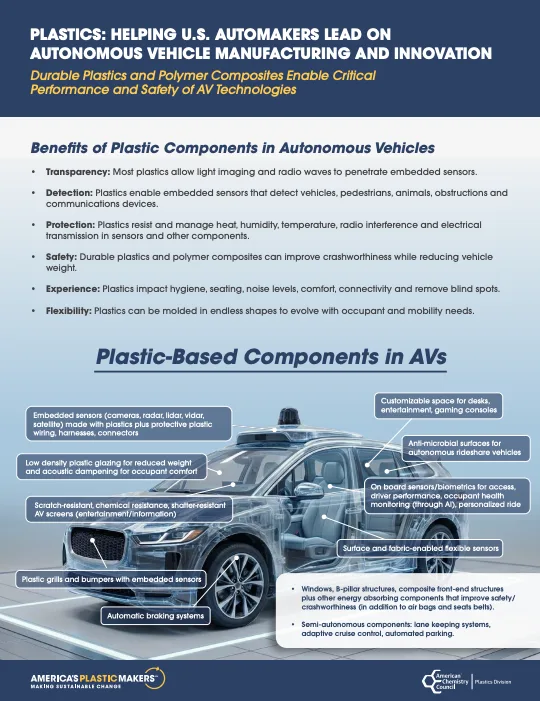
Benefits of Plastic Components in Autonomous Vehicles
- Transparency: Most plastics allow light imaging and radio waves to penetrate embedded sensors.
- Detection: Plastics enable embedded sensors that detect vehicles, pedestrians, animals, obstructions and communications devices.
- Protection: Plastics resist and manage heat, humidity, temperature, radio interference and electrical transmission in sensors and other components.
- Safety: Durable plastics and polymer composites can improve crashworthiness while reducing vehicle weight.
- Experience: Plastics impact hygiene, seating, noise levels, comfort, connectivity and remove blind spots.
- Flexibility: Plastics can be molded in endless shapes to evolve with occupant and mobility needs.
Plastic-Based Components in AVs
Move your mouse over the vehicle to learn more about how plastics are an integral part of modern automotive innovation.
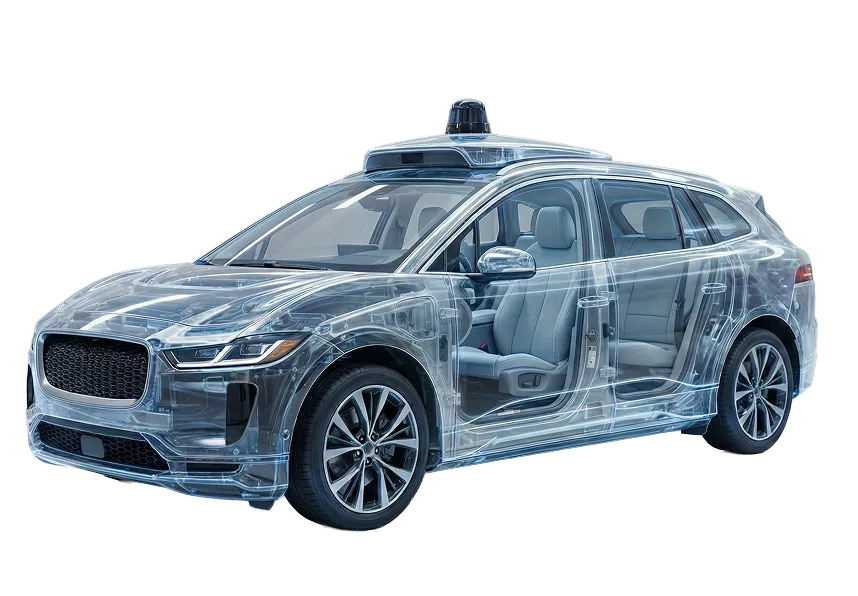
Plastic grills and bumpers with embedded sensors
Embedded sensors (cameras, radar, lidar, vidar,
satellite) made with plastics plus protective plastic
wiring, harnesses, connectors
Low density plastic glazing for reduced weight
and acoustic dampening for occupant comfort
Scratch-resistant, chemical resistance, shatter-resistant
AV screens (entertainment/information)
Windows, B-pillar structures, composite front-end structures
plus other energy absorbing components that improve safety/
crashworthiness (in addition to air bags and seats belts)
On board sensors/biometrics for access,
driver performance, occupant health
monitoring (through AI), personalized ride
Surface and fabric-enabled flexible sensors
Customizable space for desks,
entertainment, gaming consoles
Anti-microbial surfaces for
autonomous rideshare vehicles
Automatic braking systems