
Advanced Recycling?
Advanced recycling helps recycle more types of plastics by transforming them back into their core components.
What is Advanced Recycling?
Advanced plastics recycling, also called chemical recycling, refers to several different technologies that convert post-use plastics into their original building blocks to produce new plastics, chemicals, and other valuable products.
Advanced recycling can reprocess plastics over and over in a circular system.
Advanced recycling can help recycle more types of plastics, including materials that today’s recycling systems can recover only in limited amounts. This reduces the need for fossil resources and helps keep plastic out of landfills and the environment.
What Plastics Can Be Recycled Through Advanced Recycling
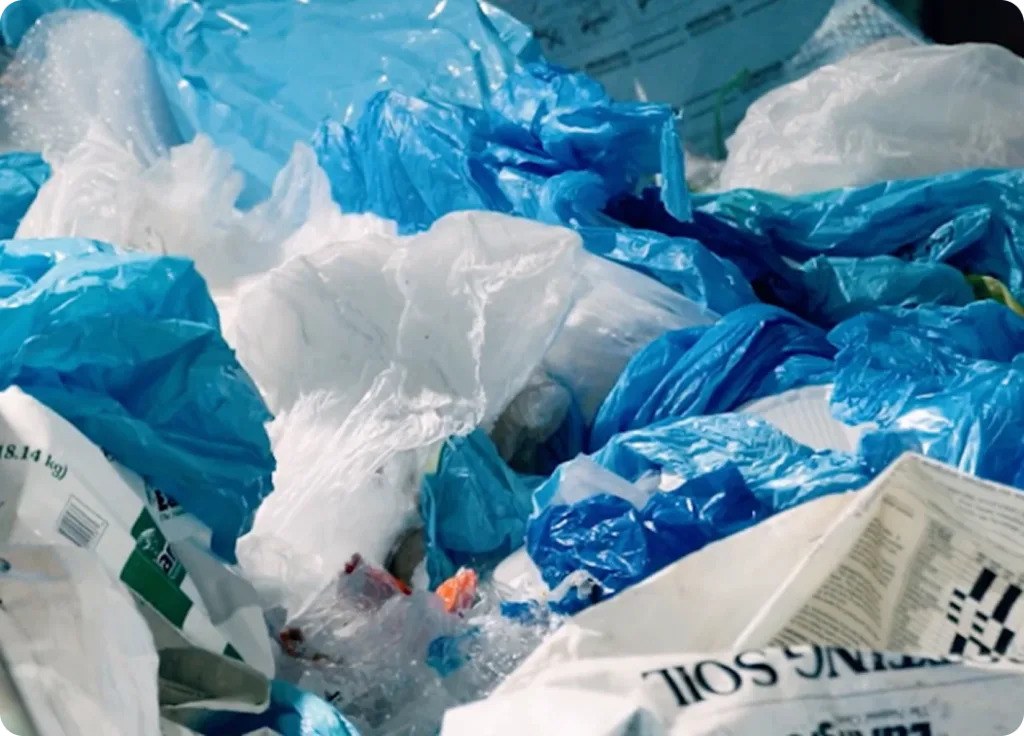
Advanced recycling can help recycle more types of plastics, including plastics used in products and packages that mechanical recycling can’t process. These include hard-to-recycle plastics like plastic bags, films and wrappers that are typically landfilled today. Advanced recycling facilities are also processing carpet, artificial turf, clothing, and other durable goods that would otherwise go to landfill.
How Advanced Recycling Works
Advanced recycling technologies turn used solid plastic into its gas or liquid raw materials by converting post-use plastics into their original building blocks.
These building blocks can be remade into brand new plastic for use in virtually any plastic product or packaging.
Advanced recycling typically alters the chemical makeup of used plastics, either by dissolving plastics with solvents or chemicals, or by using heat to break plastics down into their original components.
More than 90% of plastics aren’t being recycled. America’s plastic makers are investing in new technologies to change that. Advanced recycling is a breakthrough for reclaiming used plastics.
Here are five things you need to know about advanced recycling. Many people in the industry use the term “advanced recycling.” It means taking plastics back to their molecular form so they can be reprocessed into new products. Every week you take your trash and put it out at the curb. Imagine if that litter were dollar bills — you’d pick it up. That’s what we’re doing. We’re creating value for something that has no value.
Not all used plastic can go through the mechanical recycling process. That’s what’s really exciting about advanced recycling — it allows you to address hard-to-recycle plastics that can’t be recycled today. Advanced recycling is going to help eliminate plastic waste that currently goes to landfills, so we can use fewer natural resources in our products.
In the next 10 years, advanced recycling will have a strong foothold in the industry. It’s clearly the future. If you want to make a real dent in plastic recycling, advanced recycling is one of the top ways to do it — along with having good infrastructure.
Learn more about new technologies changing how we recycle, reuse, and remake plastics.
Advanced Recycling: An Umbrella of Technologies
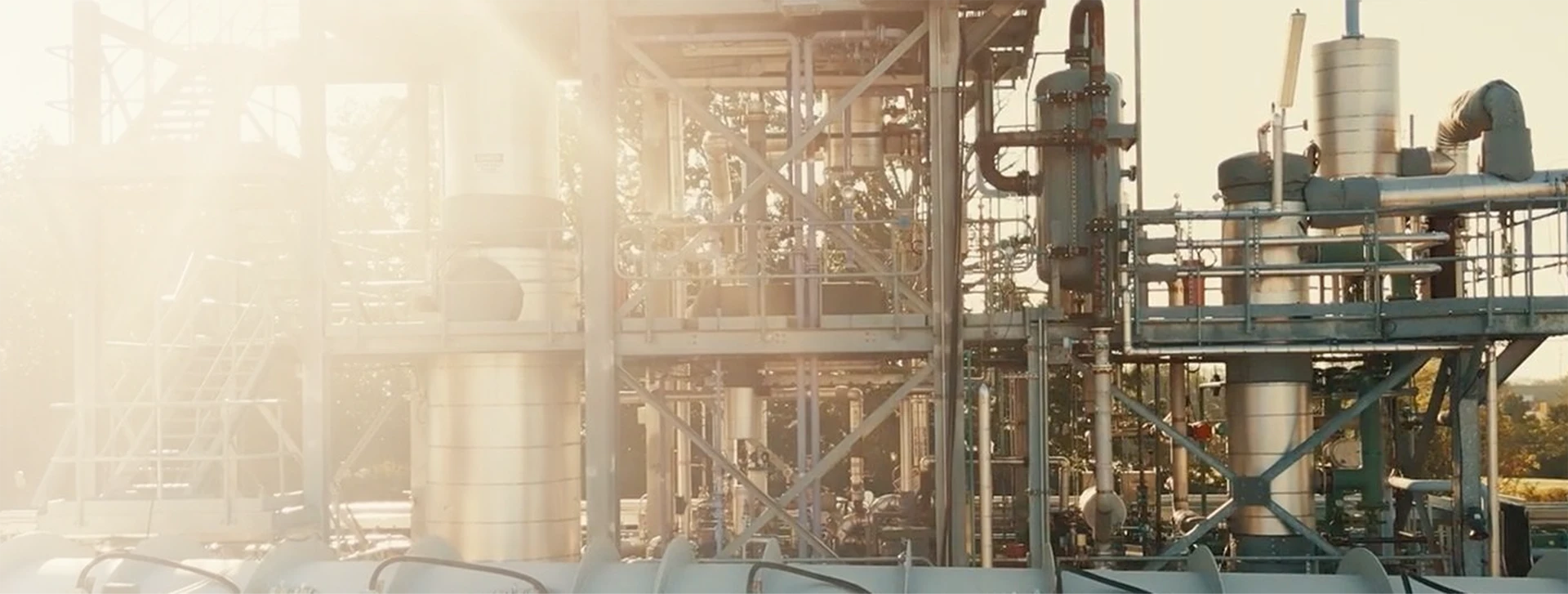
Advanced recycling is a broad umbrella term – also called chemical recycling or molecular recycling – that refers to several different technologies that purify or break down plastic waste into its constituent building blocks, which can then be used to create new plastic products.
This burgeoning set of technologies is being deployed to convert used plastic into valuable materials. In complement with mechanical recycling, advanced recycling can help increase the types and amounts of plastic we can recycle.
Advanced recycling encompasses many different technologies that use solvents, heat, enzymes, and/or sound waves to purify or break down a wide range of used plastic to create polymers, monomers, oligomers, or hydrocarbon products that can then be reused instead of going to landfill.
Advanced recycling is a suite of different technologies.
The most common advanced recycling technologies – and those generally tending to be furthest along to scaling commercially – include:
Pyrolysis
Used plastics are heated in the absence of oxygen until thermally decomposed, then condensed and converted into valuable materials.
Gasification
Used plastics are heated in an oxygen-controlled atmosphere and converted into syngas that is then converted into valuable materials.
Depolymerization
Used plastics are broken into smaller molecules, such as monomers, that can be used to make multiple products. Depolymerization includes solvolysis, methanolysis, and glycolysis technologies.
Investment and Real-World Use
The plastics recycling industry is investing billions of dollars in advanced recycling technologies and has launched dozens of projects designed to divert millions of tons of used plastic per year from landfills.
Multiple large consumer product companies already create packaging using recycled plastics created by these technologies. And they are clamoring for more to meet sustainability goals.
Hundreds of companies have committed to make more of their packaging recyclable and to use more recycled content. For more info, visit U.S. Plastics Pact.
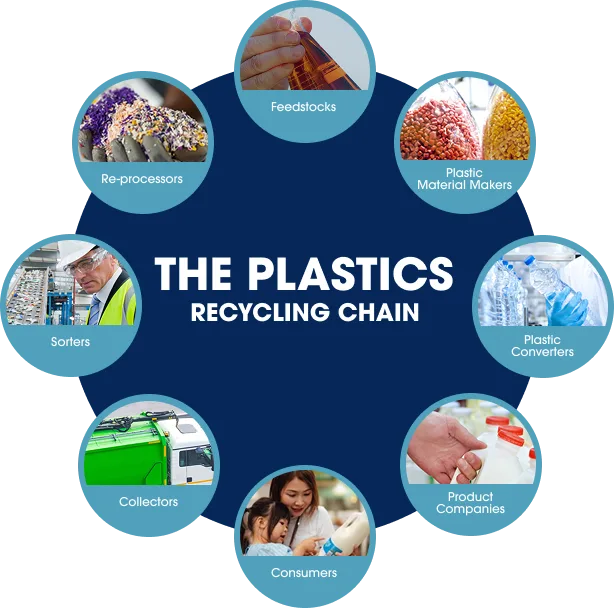
The Plastic Recycling Chain
To recycle plastic, an interwoven chain of players must work in concert. The plastic recycling chain can be viewed as a virtuous circle, in which each participant enables the next.
Advanced recycling strengthens this chain by addressing plastics that are difficult to recycle mechanically and keeping valuable materials in use.
Advanced Recycling 101
What’s the difference between advanced, chemical, and molecular recycling? What are “circular plastics”?
Advanced recycling is a broad term that encompasses multiple technologies that break down plastic to the molecular level, into liquid or gaseous raw materials, which is why the term “molecular recycling” is sometimes also used. Advanced recycling technologies usually involve chemical processes, unlike the physical processes used in mechanical recycling. Hence advanced recycling is also called “chemical recycling.”
These technologies support a circular economy for plastic, in which plastic is sustainably produced, designed, used, reused, and recycled – again and again.
What are the benefits of advanced recycling?
Advanced recycling helps reduce plastic waste and progress toward sustainability goals for communities, states, and brands striving to make better choices. Advanced recycling technologies enable more plastics to be turned into a wide variety of new products — including highly regulated applications such as food- and medical-grade packaging — instead of landfilling them.
Learn more about the benefits of advanced recycling in this fact sheet.
Why is it “advanced”?
Advanced recycling is a set of manufacturing processes that transform the chemical structure of post-use plastic products back to their basic chemical or molecular components. Many of the plastics suited for advanced recycling are traditionally hard to recycle by mechanical recycling. These technologies are advancing the existing recycling capabilities through chemistry.
Advanced recycling can help:
- Recycle hard-to-recycle plastics, such as films, layered packaging, and mixed plastics.
- Help recycle more of the 90% of plastics that aren’t recycled today.
- Transition plastic manufacturing from a linear model to a circular model.
- Limit our use of natural resources to create new plastic.
- Create virgin quality plastic for food, medical, and pharmaceutical packaging applications.
What is the difference between mechanical and advanced recycling?
The waste hierarchy, created to help prioritize waste management strategies in order of environmental preference, is: re-use, re-purpose, mechanically recycle (which is melting and reforming of plastics), advanced recycle (which is recycling at the molecular level) and, if necessary, landfill. Both mechanical and advanced recycling processes are needed to help keep plastic resources out of landfills and the environment.
Mechanical, or traditional, recycling uses technologies that retain plastic’s original molecular structure. Advanced recycling typically alters the chemical makeup of used plastics, either by dissolving the plastic with solvents or chemicals, or by using heat to break down plastics into their original components.
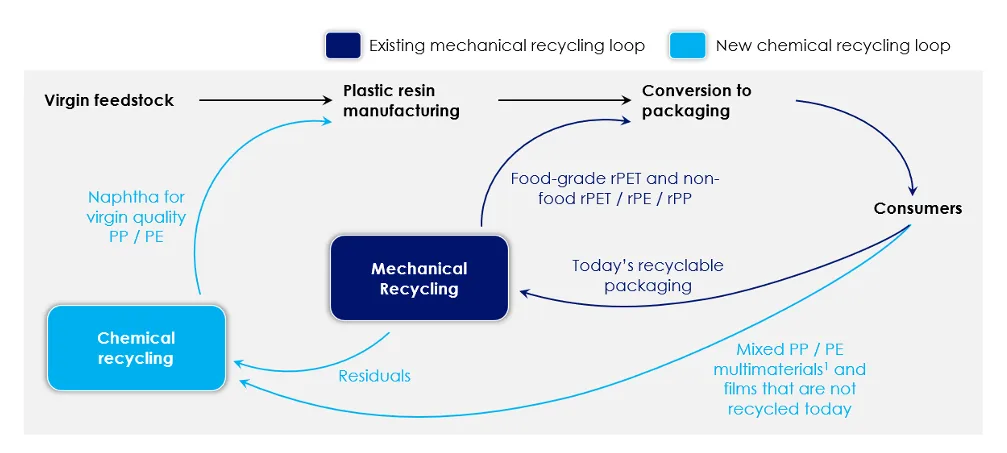
Mechanical and advanced recycling are complementary approaches: mechanical recycling works well for plastics such as beverage bottles and milk jugs, while advanced recycling works well for plastics that are difficult to sort and process mechanically, like flexible films. Advanced recycling technologies help increase the amount and variety of plastics that can be recycled instead of landfilled.
How Advanced and Mechanical Recycling Complement Each Other
What plastic can be recycled in advanced recycling?
Advanced recycling technologies convert used plastics into their molecular building blocks. To understand what can be recycled, understanding the chemical structure of plastics is helpful. Here is a simple explanation:
All plastics are polymers. A polymer is a large molecule made of repeating units of smaller molecules, called monomers, that are linked together by chemical bonds to form long chains.
Polymers can be made by connecting a single type of monomer, such as those commonly found in packaging and durable goods from pipes to toys (e.g., polyethylene, polypropylene, polystyrene, or polyvinyl chloride); or by the reaction between two different types of monomers, such as those commonly found in carpets and clothes (e.g., polyethylene terephthalate aka polyester, nylon).
Furthermore, plastics can be characterized as thermosets or thermoplastics. Typically, only thermoplastics are recyclable.
- Thermoset plastics are hard and durable and are difficult to recycle due to chemical bonds between polymer chains called crosslinks. Examples include polyurethanes and epoxy resins.
- Thermoplastics, by contrast, do not contain crosslinks and are often less rigid than thermosets, allowing the material to soften when heated and be reshaped. Thermoplastics are easily molded and extruded into films, fibers, and packaging. Examples of thermoplastics include polyethylene (PE), polypropylene (PP), and polystyrene (PS).
Where is the used plastic sourced for advanced recycling?
Advanced recycling facilities process a mix of post-consumer and post-industrial plastics. Advanced recycling companies work with sustainability-minded companies and recycling organizations across the plastics supply chain to secure used plastics that would otherwise end up in a landfill. Recovering these plastics for recycling reduces the potential for these plastics to leak into the environment. Supply partnerships enable companies to meet their waste reduction-landfill goals.
What is being manufactured at advanced recycling facilities?
Advanced recycling produces virgin-quality plastic that is safe for food, medical, and pharmaceutical packaging, so it can be used in virtually any application where plastic is being used.
Many global brands have incorporated advanced or chemically recycled plastic into their products, including luxury cosmetics and beauty brands, food companies, restaurant chains, and automakers.
Examples of consumer brand companies that have publicly announced that they are using plastic made from advanced recycling include:
- Estee Lauder brands including Aveda, Clinique, La Mer and Bobbi Brown
- Nalgene and CamelBak water bottles
- Tupperware
- Wendy’s drink cups
- Warby Parker eyeglass frames
- Herbal Essences shampoo/conditioner bottles
- Mattel playsets
- Ethicon medical device packaging
- Clothing brands such as Patagonia and Zara
Advanced recycling is also used to make non-plastic products for multiple industries, such as building and construction. For example, GreenMantra Technologies uses advanced recycling to create industrial waxes that are used as performance enhancers in asphalt roofing and roads and composite lumber.
Who are the customers for the products of advanced recycling?
Companies already purchasing the products of advanced recycling or that have announced agreements to do so include Gatorade, H&M, Estee Lauder, Procter & Gamble, Wendy’s and more. Many of these companies have set goals to use more recycled content. Using recycled plastic generated through advanced recycling can help companies meet their sustainability goals.
In addition, multiple plastic makers are integrating these products and processes into their manufacturing and supply chains, such as Americas Styrenics, BASF, Chevron Phillips Chemical, Dow, Eastman, Exxon Mobil, LyondellBasell, and SABIC. These companies can take the original building blocks generated through advanced recycling and use them to create new, high-quality plastics, displacing virgin plastic derived from fossil-based sources.
What is the current scale of advanced recycling?
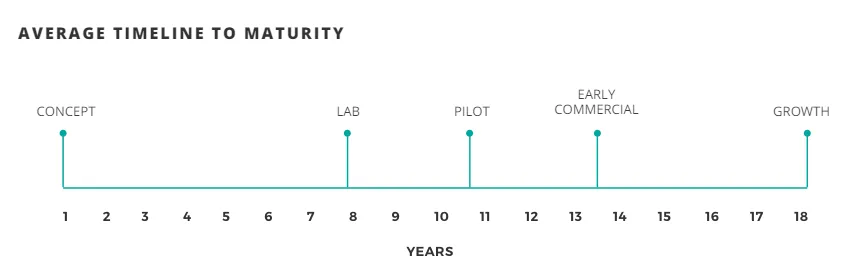
Closed Loop Partners, a N.Y.-based investment firm, interviewed 62 advanced recycling technology providers and found it has taken, on average, 17 years to reach growth scale.
Business analysts across a wide variety of industries suggest it takes a couple of decades for technologies to scale and come to market in an effective way, and we’re right in the middle of that now with chemical recycling technologies such as pyrolysis and methanolysis in the United States. There are now companies using these technologies at scale, helping keep plastics out of landfills and in use.
Just as our smartphones, solar panels and electric vehicles continue to evolve, advanced or chemical recycling technologies are scaling up and becoming more efficient. This is happening at the same time that hundreds of companies are committing to use more recycled plastic, so there is a tremendous opportunity in the U.S. to recycle more of our post-use plastic materials.
As with any innovation in entering its commercialization phase, some companies may struggle coming to market, but many are succeeding and expanding operations.
Currently, there are more than a dozen companies working on advanced recycling in the U.S. focused on optimizing for plastics-to-products. Many of those initially created as pilot projects are now expanding. Recently there have been announcements for many new or expanded advanced recycling facilities, including from ExxonMobil and Eastman. Billions of dollars of investments in the U.S. and around the globe are increasing advanced recycling capacity and plastics’ sustainability.
“The good news is that innovative technologies exist – with even more emerging and scaling – to solve these challenges. … If these technologies are more widely adopted and scaled, tremendous economic value can be realized,” according to analysis by Closed Loop Partners. “This renewed resource could displace fossil fuels being used in these markets today.” Further, there are environmental benefits from recycling used plastic back into useful products, including reducing or avoiding environmental emissions. To reach this potential, more investment is needed to support and scale these transformational technologies.
This sentiment is furthered by AMI in its May 2024 Chemical Recycling Global Status report: “The development of the chemical recycling industry differs between regions across the globe. Europe is at present considered to be at the forefront of technological developments in chemical recycling technology. … Over the coming years, developments in North America are, however, forecast to accelerate at a faster pace.”
Environmental Impact
Is advanced recycling good for the environment?
- These technologies can help displace the use of fossil resources by using plastic as a valuable raw material. Research shows that advanced recycling can reduce fossil energy use by 97% compared to landfilling.
- Recycled/circular content from advanced recycling could reduce climate impact by more than 100% compared to landfilling and waste-to-energy.
- A study by BASF and Sphera, an environment, health, safety, and sustainability consultancy, shows that advanced recycling, specifically pyrolysis, emits 50% less CO2 than incineration and saves significant CO2 emissions when manufacturing low-density polyethylene (LDPE) from pyrolysis versus LDPE from new production. .
Are there significant emissions created during advanced recycling?
Advanced recycling facilities have been found to have lower air emissions than other well-regulated facilities often found in our communities, including food processing, hospitals and universities. A 2021 report from Good Company, a sustainability consulting firm, studied the air emissions of pyrolysis-based advanced recycling and found them to be very low. And, just like other well-regulated facilities, advanced recycling facilities are regulated under the U.S. Clean Air Act and any state and/or local regulations for manufacturers.
According to the Good Company report, such facilities could have:
- Carbon monoxide (CO) emissions comparable to average auto manufacturing operations.
- VOC and PM10 emissions similar to smaller-than-average food processing plants,
- Nitrogen oxides (NOx) emissions similar to institutions such hospitals, universities, and prisons, and
Does advanced recycling take place in high heat?
Pyrolysis as used for advanced recycling breaks down plastics in what EPA refers to as “moderately elevated temperatures,” generally less than 800 degrees Fahrenheit. In comparison to other material recycling technologies, this is very low energy intensity. For example, aluminum needs to be heated to 1200 degrees to be recycled and glass up to 2800 degrees.
Will advanced recycling increase reliance on fossil fuels?
Advanced recycling reduces demand for fossil-energy based raw materials by using post-use plastics as a feedstock for many types of new products, including food- and medical-grade packaging. Some examples of products being made in the U.S. include Wendy’s drink cups, products and packaging from Estee Lauder, Warby Parker glasses, Nalgene water bottles, and many more items. All these are made in part with recycled plastics generated through advanced recycling.
And this is just the beginning. Many global brand companies, including those listed above, have set sustainability goals to include more recycled content in their packaging. Advanced recycling will play a key role in helping these companies meet their commitments, while helping to reduce plastic waste.
How does advanced recycling affect climate change?
Advanced recycling allows us to reuse materials that otherwise would go to waste and can also help reduce CO2 emissions during the production process.
A 2023 study by the U.S. Department of Energy’s Argonne National Laboratory found in certain scenarios, plastic production through advanced recycling of used plastic via pyrolysis can help displace higher carbon fossil-based production, reducing greenhouse gas emissions and increasing the recycling rate in the United States.
A 2022 report by the City College of New York’s Grove School of Engineering found significant environmental benefits of advanced recycling:
- Advanced recycling technologies produce plastic and chemical products with reduced global warming potential compared to products made from virgin resources, and
- Advanced recycling can reduce fossil energy use by up to 97% compared to landfilling.
Another 2022 study by the Consumer Goods Forum shows that pyrolysis and related chemical recycling technologies produce lower CO2 equivalent emissions compared to primary virgin naphtha production in most scenarios.
Policy & Regulation
How are advanced recycling facilities regulated?
Advanced recycling facilities are stringently regulated at federal, state, and local levels. These facilities are subject to the Clean Air Act under sections 111 and 112, the Clean Water Act, and other federal, state, and local requirements. They also need to obtain operating permits from the states and continue to monitor and report air emissions as they operate. Just like other manufacturing sites, advanced recycling facilities may be subject to fines and maybe even closure for operational and safety violations. State environmental officials have the tools they need to properly regulate the facilities.
Manufacturing regulations are the most appropriate for the activities taking place at advanced recycling facilities, where sorted used plastics are manufactured into a new product that is then sold.
How is recycled content calculated?
Hundreds of companies have established goals to use more recycled plastic in products and packaging. How are they tracking their use of recycled materials and labeling their products accordingly? That’s where a third-party certification process like mass balance can come in – and it can be applied to a variety of recycling processes. Here is how it works:
- Blending Recycled & Raw Materials: Advanced recycling breaks down used plastic to the molecular level. These building blocks can be used as is or mixed with raw materials to create a larger, blended stream.
- Manufacturing Process: These combined building blocks, with properties and performance now indiscernible from each other, become the valuable materials to create something new, such as food- and medical-grade plastic.
- Verified Recycled Plastics: Mass balance supports transparency and accurate tracking for recycled materials through an auditable chain of custody accounting methodology. Third-party certification allows companies to credibly communicate the use of recycled/circular content in their finished products.
Mass balance is a well-established accounting method used for decades by a wide range of industries, such as renewable energy and Fair-Trade cocoa and coffee, to support sustainability statements. Regarding advanced recycling outputs, the mass balance approach is intended to provide a set of rules for how to allocate recycled content to different end products. “Ultimately, the amount of recycled feedstock that enters a steam cracker needs to equal the amount existing it, thus providing a means to estimate the average recycled content in a product,” explains AMI in its Chemical Recycling Global Status report.
What is incineration? What is combustion? What is burning?
Some regions use incineration or waste-to-energy facilities instead of landfilling their solid waste. This is most common in Europe and island nations. Though some of these facilities recover some gases for energy and other purposes, this is NOT considered recycling and is a linear model where products are made, used, and discarded.
Incineration does not fall under the umbrella of advanced recycling. Incineration refers to destroying waste materials by burning, without any provision for recovering materials.
Conversely, during advanced recycling technologies such as pyrolysis and gasification, thermal energy (heat) is used in the absence of oxygen, so there is no combustion. This means plastics are not burned during advanced recycling. Instead of being combusted, plastics are heated and broken down into their original building blocks to form new feedstocks for plastics and chemicals, waxes and other products.
Pyrolysis = No Oxygen
Pyrolysis breaks polymers into molecules of significantly shorter chain length or even monomers, which are the building blocks of plastics.
Combustion Needs Oxygen
Combustion oxidizes organic molecules and creates carbon dioxide, leaving no viable product.
As a manufacturing process, there is a business incentive in advanced recycling to preserve every molecule to reuse.
Isn’t advanced recycling just creating fuel?
Advanced recycling is a broad umbrella term encompassing many different technologies that break down a wide range of used plastic materials to create new polymers, monomers, oligomers or hydrocarbon products that can then be reused, re-entering the manufacturing supply chain instead of going to landfill.
These technologies can create a variety of outputs, but it is only considered recycling when the output is used to create new materials or products. Converting plastics to fuel is not recycling. A decade ago, technology providers set out to convert hard-to-recycle used plastics into fuel. Technologies and the world have changed since then. Some companies still use advanced technologies to create fuel, but that isn’t considered “recycling.”
Technology
What is pyrolysis?
Pyrolysis technology is thought of as a potential game-changer in plastic recycling.
Pyrolysis is a thermal decomposition process that transforms materials by heating them in the absence of oxygen, preventing combustion. This method has been historically used to produce various materials, such as charcoal, roasted coffee, biofuels, and other chemical products. In plastic recycling, pyrolysis is employed to convert used plastics, which would otherwise be disposed of, into valuable products like pyrolysis oil, which can be used to make new plastics.
During the advanced recycling pyrolysis process, post-use plastics are heated to about 580-750 F (300-400 C), breaking them down into their molecular components. This differs from incineration, as there is no burning involved, and incineration takes place at much higher temperatures of 1,800 to 2,700 F (980 to 1,500 C) – 3 to 4 times hotter than pyrolysis facilities usually run. The pyrolysis process would fail if oxygen was present in the system, preventing the production of any sellable product, as Eric Hartz, president of Nexus Circular, told senators during Congressional testimony.
This manufacturing process thermally decomposes and then cools, condenses, and converts used plastics into valuable raw materials and products. In addition to the pyrolysis oil, the pyrolysis process also produces small amounts of non-condensable gases (about 10%-15%) that can be converted to heat or electricity to power the operating system, plus some char (about 4-5%).
The innovative application of pyrolysis for plastic recycling is relatively new and continues to evolve. By converting used plastics into reusable materials, pyrolysis has the potential to increase recycling rates and reduce reliance on virgin fossil resources.
What are the differences in the advanced recycling technologies?
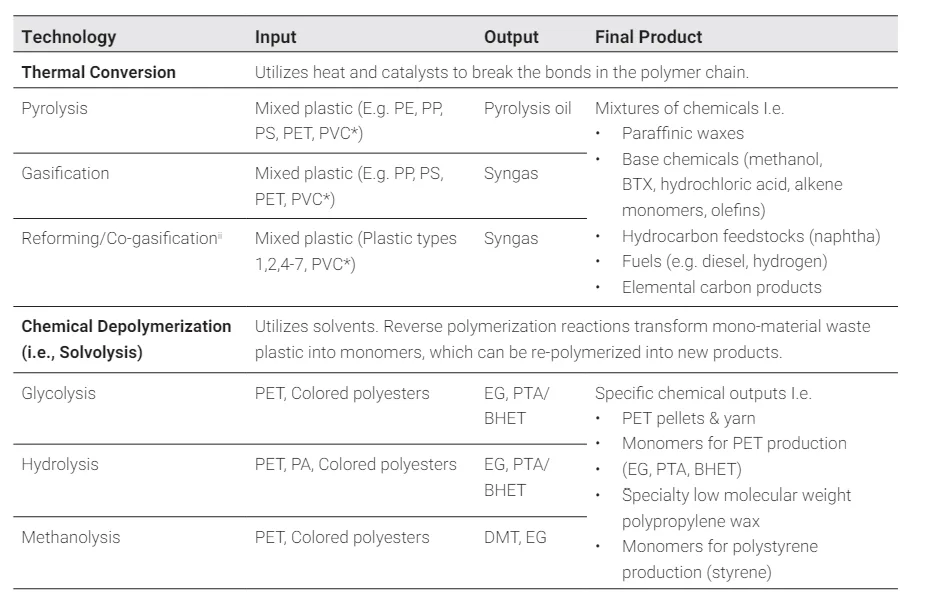
This table from a City College of New York report shows examples of the inputs, outputs and final products of various advanced recycling technologies.
What is pyoil?
During pyrolysis, used plastic, which would otherwise be destined for disposal, is converted into pyrolysis oil, or “pyoil.” Pyoil is typically sent to petrochemical manufacturing facilities, where it is combined with hydrocarbons derived from fossil fuels. These mixed materials undergo processing to separate various fractions, which are then used to produce plastics, chemicals, waxes, lubricants, and other products.
Pyoil can be used in a manner similar to oil or natural gas. Each barrel of pyoil effectively replaces a barrel of virgin fossil-derived resources, contributing to a reduction in the demand for oil and natural gas extraction.
What is char? Is it the same as ash?
The pyrolysis process creates a small amount of char, approximately 4-5% of the process output, generated from cellulosic and other types of contamination, like labels or fillers. This char, or black carbon, has other applications such as asphalt production, or it can be landfilled according to local requirements.
Ash, which is a byproduct of burning or combustion, has a different chemical makeup than char. Char and ash are not the same.
Why would a company choose one technology over another?
Each technology under the advanced recycling umbrella has a unique set of traits. One of those traits, which is vitally important to the output it creates, is the type of plastic materials the technology can best process. So companies may choose a specific path based on feedstock potential. Below is a chart from a City College of New York report that outlines the potential application for various advanced recycling technologies. It is not intended to be a comprehensive list.
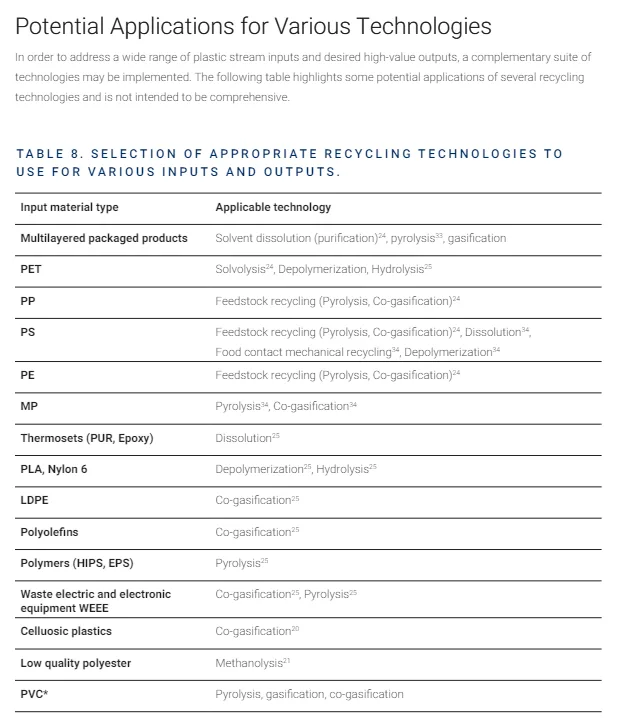
Investment company Closed Loop Partners says, “There are tradeoffs to each molecular recycling technology category and type. The viability of one solution depends on those metrics that matter most to a brand, investor, or community.” In an 18-month examination, it weighed the different technologies across a series of metrics to help investors understand the benefits and risks associated with advanced recycling technologies.
LEARN MORE About Advanced Recycling
Take a deeper dive and learn more about how advanced recycling can tackle the 90% of plastics that aren’t recycled today.
Fact Sheets
The following series illustrates how advanced recycling turns used plastic into new plastic and provides more information about the environmental profile of this new manufacturing technology.
Insights
Find out what’s happening in Advanced Recycling and how we’re making sustainable change.
Podcasts
-

Episode 33
Slam Dunk! Atlanta Hawks x Sustainability
Sofi Armenakian, Head of Sustainability, Atlanta Hawks and State Farm Arena"Every decision matters, right. And being a part of an organization where in 2022, we had 1.5 million fans coming into our venue, whether that's for a Hawks game or to come see your favorite artist perform, there is an opportunity to make an impact."
-
Episode 31
The Road to Sustainable Infrastructure
Bill Buttlar, Glen Barton Chair in Flexible Pavement Technology, University of Missouri Dept. of Civil and Environmental Engineering“We're a few years into this research, and it's really checking all the boxes at this point. We're finding that it's making the mix more durable, obviously more sustainable, and we're finding formulations that are reducing the cost. And that's the trifecta. If you can get the economics and the durability and the sustainability all going in the right direction, it's almost like why wouldn't we do this?”
-
Episode 29
Sustainability Through an Economic Lens
Martin Ko ehring, Global Director of Impact at Forum for the Future; Former Head of World Ocean Initiative; and Senior Manager for Sustainability, Climate Change, and Natural Resources at Economist Impact and Stew Harris, Senior Director, Global Plastics Policy at American Chemistry Council“Those plastic specs we see in the ocean, those plastic bottles, they end up there because we haven't properly incentivized recycling, reuse. We haven't properly looked at design, for example, we haven't looked at the whole value chain of plastics and found ways to bring as much plastic back into the system as possible. And that has policy elements to it, but it also has design solutions in it and recycling technologies."
-
Episode 27
Blocking and Tackling: Keys to Resiliency in Recycling
Stan Chen, CEO of RecycleGO and Douglas Johnson-Poensgen, CEO of CirculorIn this episode on Blockchain, Stan Chen of RecycleGO and Douglas Johnson-Poensgen of Circulor share how blockchain can be used to trace, verify, and report sustainability efforts within the plastics recycling sector.
-
Episode 25
Beneath the Surface: Solving Ocean Plastics
Doug Woodring, Director/Founder of Ocean Recovery AllianceIn this episode on ocean plastics, Doug Woodring of Ocean Recovery Alliance shares how corporations and activists can work together to recycle the plastics in our oceans, lakes, creeks, and rivers to make water cleaner for everyone.