What if…? I love asking this question. Since the beginning of civilization, it’s been used to solicit big ideas on issues ranging from personal morality to geopolitical strategy to my kids’ bedtimes.
As America’s Plastic Makers, we’ve spent a lot of time thinking about how to recycle more plastics. We’ve answered the question: Why do we want to make as much new plastics out of recycled plastics as feasible? See my answers here and here.
But we’ve never fully answered the question: What if we succeed?
Economic Impact of Plastics Recycling
So, I asked our economics wizards to answer the question: What if we could recycle half of the plastics that end up in landfills? What would be the impact on our economy, on payrolls, on jobs?
What they found provides even greater motivation for plastics recycling to succeed.
According to their new analysis, “Economic Impact of Plastics Recycling,” redirecting 50% of landfilled plastics to recycling facilities would result in:
- 173,200 total new jobs supported nationwide, including 43,300 direct positions operating recycling facilities;
- $12.8 billion in annual payroll across direct, indirect and payroll induced spending effects; and
- $48.7 billion in annual economic output, including $16.4 billion generated directly by recycling facilities.
More new jobs. Billions in new payroll. Billions in new economic output. As our economists note: “These benefits would be distributed across local communities, supporting economic development while reducing environmental impact.”
Analysis
“ACC’s findings highlight the opportunity to reduce the amount of plastic that is landfilled while promoting economic growth. With continued investment and supportive policy, expanding both traditional and advanced recycling can help the U.S. achieve a more sustainable and circular economy.”
Policy: 3-Point Plan
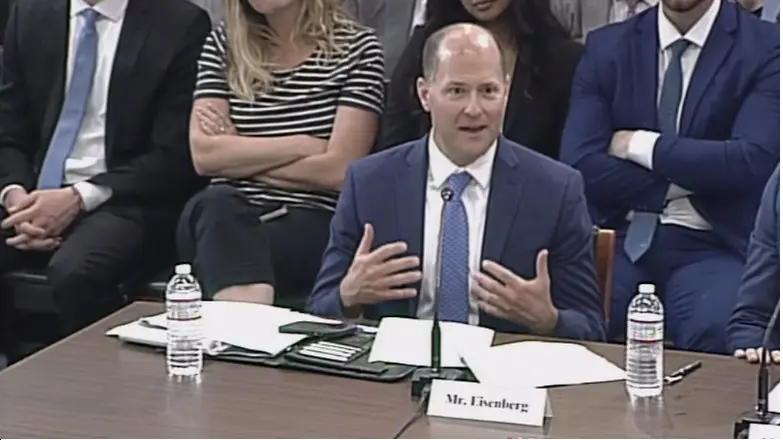
So, recycling more plastic is good for the environment (less plastics buried in landfills) and good for the economy (more jobs/$$). How do we get to 50% or higher? Through new technologies – such as advanced recycling, modern sortation methods, and even AI – private investment and smarter policies, as I laid out to Congress in July:
“America’s Plastic Makers believe in a future where used plastics do not end up in the environment, but are instead reused, remade into new plastics, or converted into valuable raw materials that society needs.”
“To get there, we must modernize the way we collect, recycle, and reuse plastics and other materials. This is not a small task, but we believe we can get there with the right policies.”
I introduced our “3-Point Plan to Recycle More Plastics and Strengthen U.S. Manufacturing” that calls on policymakers to:
- Establish national recycling standards to bring consistency and scale to plastic recycling.
- Recognize advanced recycling as manufacturing and count plastic made this way as recycled content.
- Assert American leadership in negotiations on a global agreement to end plastic pollution.
These three steps build on our 5 Actions for Sustainable Change, a comprehensive proposal to accelerate plastic circularity, boost U.S. competitiveness, and increase access to American-made recycled plastic. And these steps would further enable critical industries to manufacture and deliver the essential and often life-saving products that all Americans rely on.
What if…?
Modernizing an outdated recycling infrastructure and unleashing new innovations will take time and considerable determination. But if we succeed, we’ll help meet EPA’s goals and strengthen U.S. manufacturing. Our economists:
“While 50% is a significant increase compared to current plastics recycling rates, it aligns with the EPA’s National Recycling Goal to increase the national recycling rate to 50% by 2030 and supports the plastic industry’s goal that 100% of U.S. plastic packaging is reused, recycled, or recovered by 2040.”
What if we succeed? Great question. Now we know the answer.